
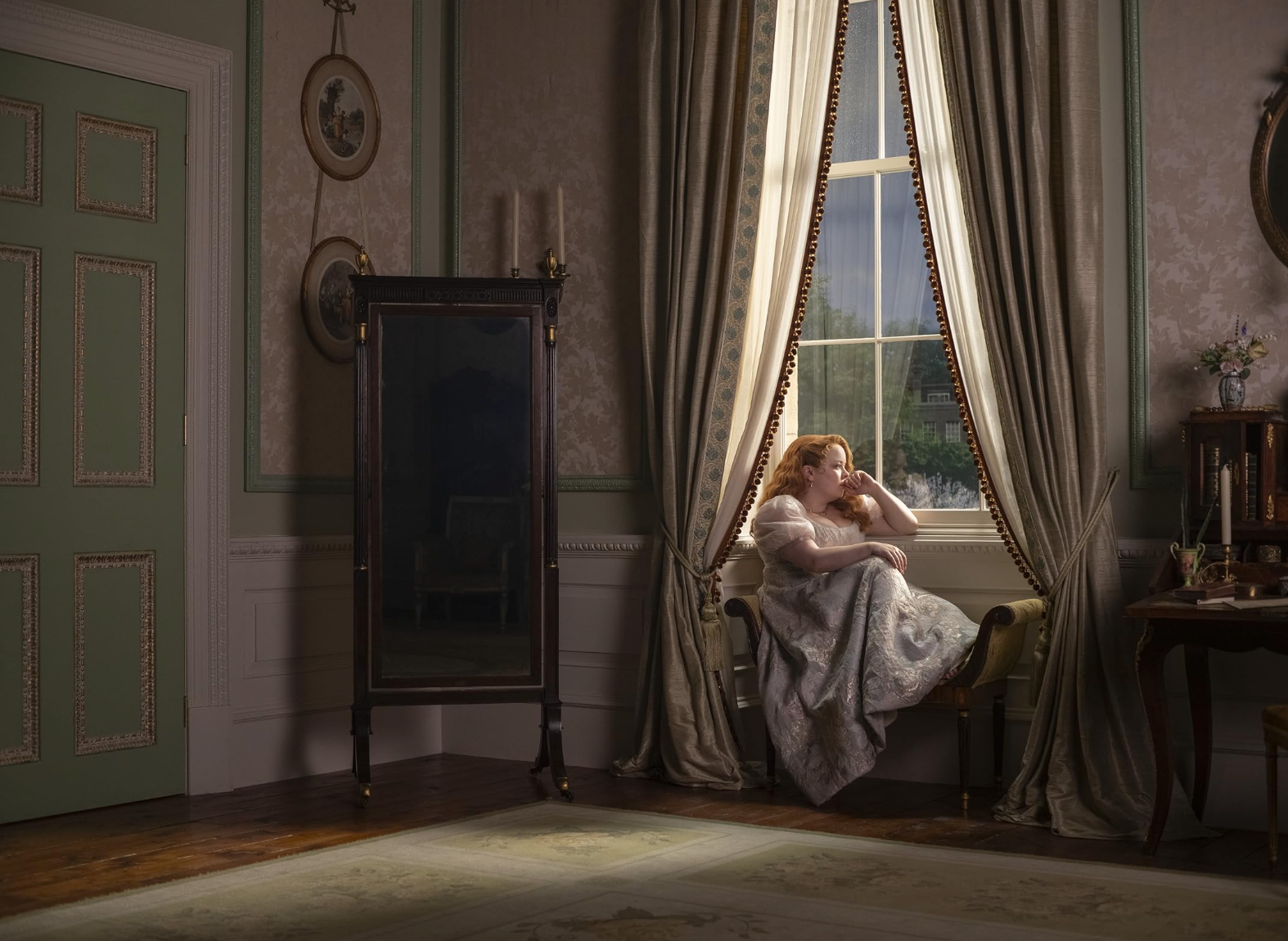
There are period dramas.
And then there is Bridgerton.
From the moment it premiered on Netflix in 2020, the series did something subtle but radical. It didn’t try to recreate Regency England with documentary precision. It created a fantasy of it. A heightened, candy-coated, emotionally amplified version of history where longing glows, chandeliers shimmer, and social rules bend just enough to let desire breathe.
This is not just a show about corsets and courtship. It is a fully constructed aesthetic universe.
Let’s decode it.
1. What Is Bridgerton’s Visual Language?
Bridgerton’s visual language is built on excess, softness, and saturation.
Unlike traditional period dramas that lean into muted palettes and realism, Bridgerton embraces:
- High-key lighting
- Pastel-saturated color grading
- Floral abundance
- Ornamental symmetry
- Slow, deliberate camera movement
- Romantic framing
The production design transforms stately homes into almost confectionary spaces. Wisteria cascades across façades. Ballrooms feel dipped in sugar. Gardens are impossibly lush. The interiors glow in shades of robin’s egg blue, lilac, butter yellow, and rose.
Even the now-iconic “Bridgerton fireplace” loop released by Netflix during the holidays allowed fans to literally import that glowing Regency ambiance into their own homes. A small but genius cultural gesture. The show’s décor became portable. Shareable. Livable.
The aesthetic says: this world is polished, curated, idealized. It’s history through a romantic filter.
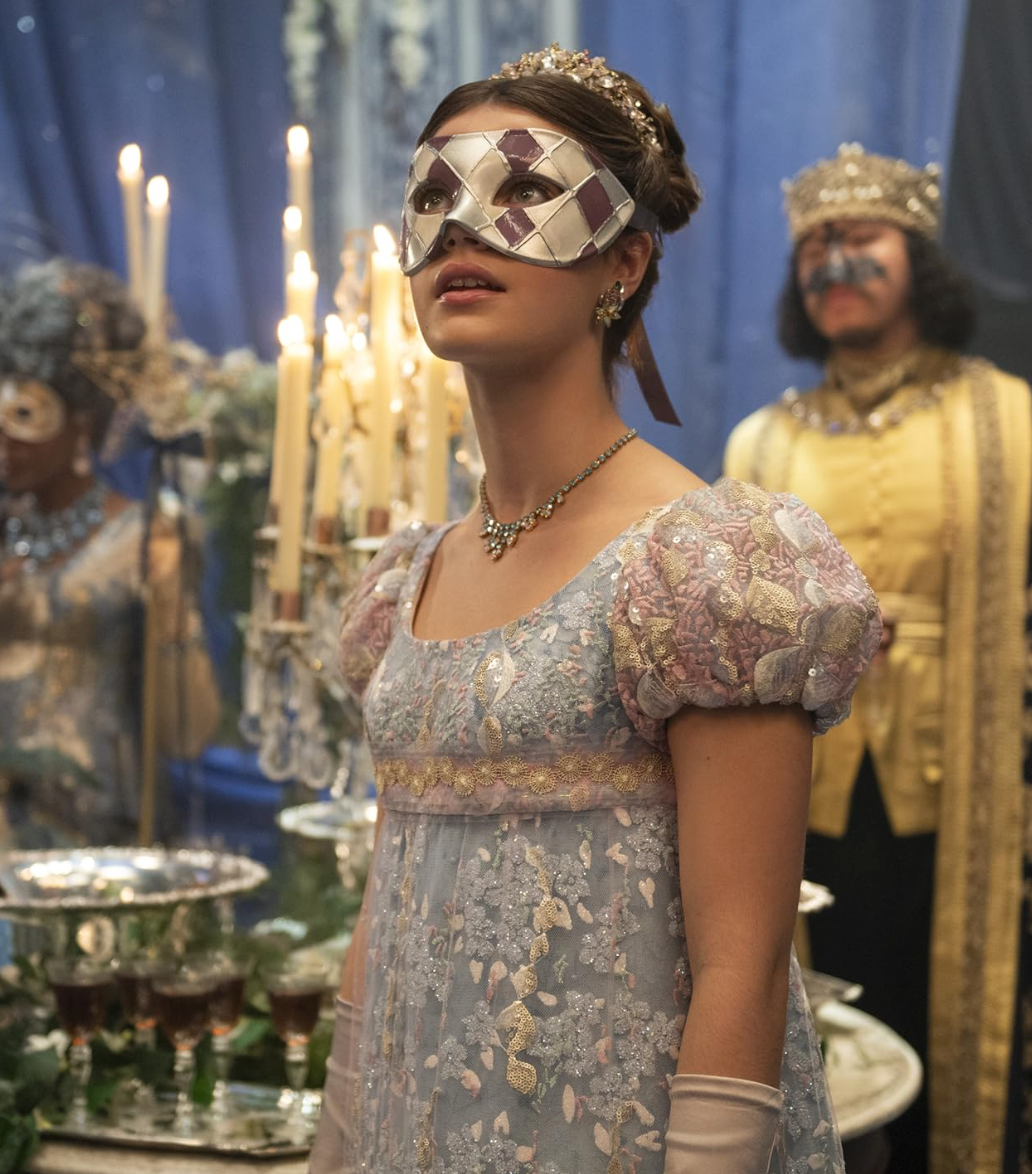
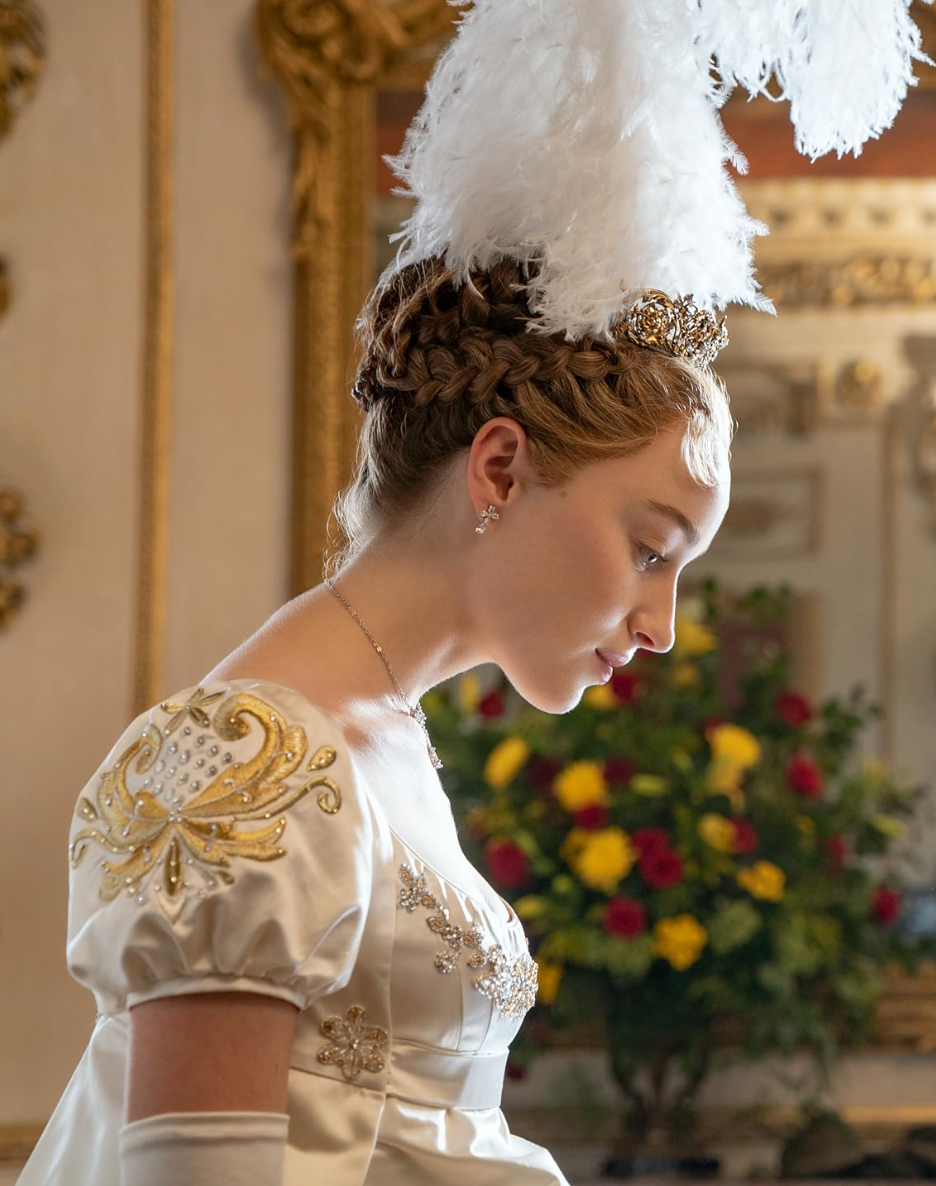
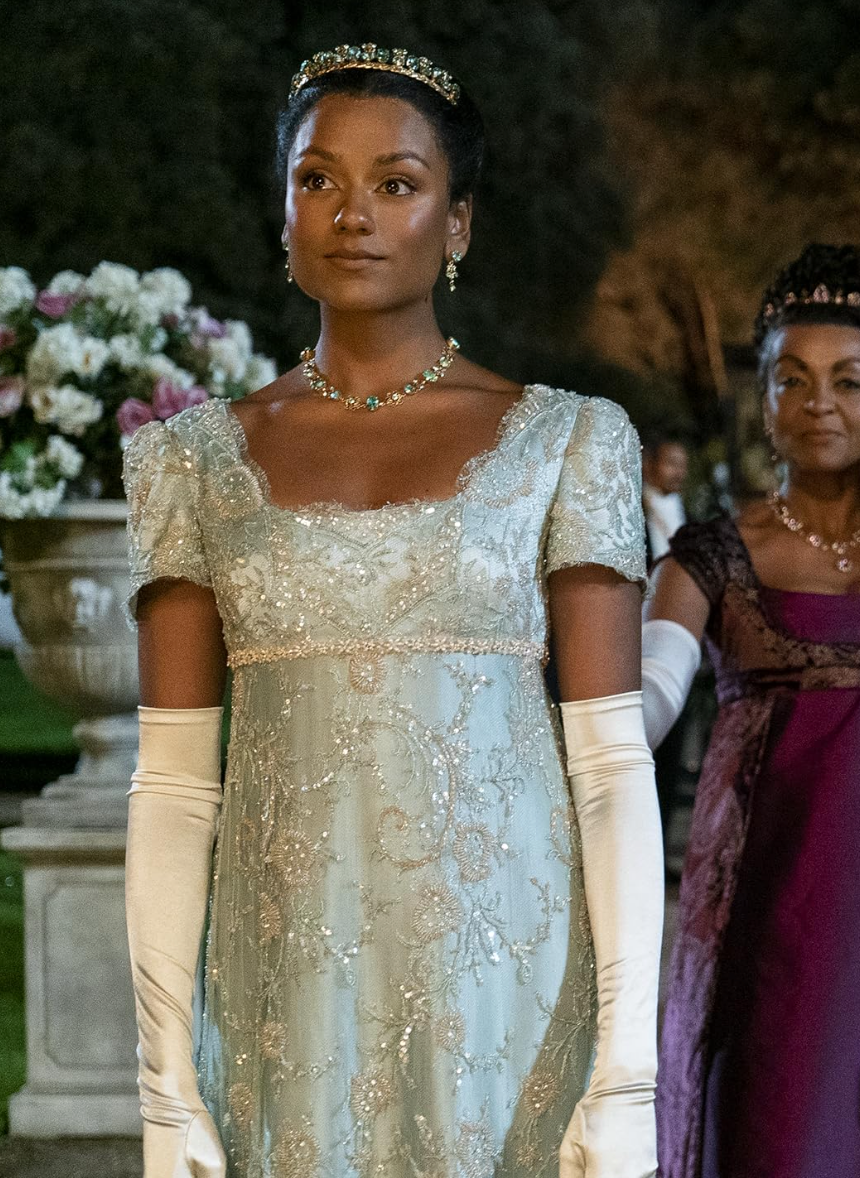
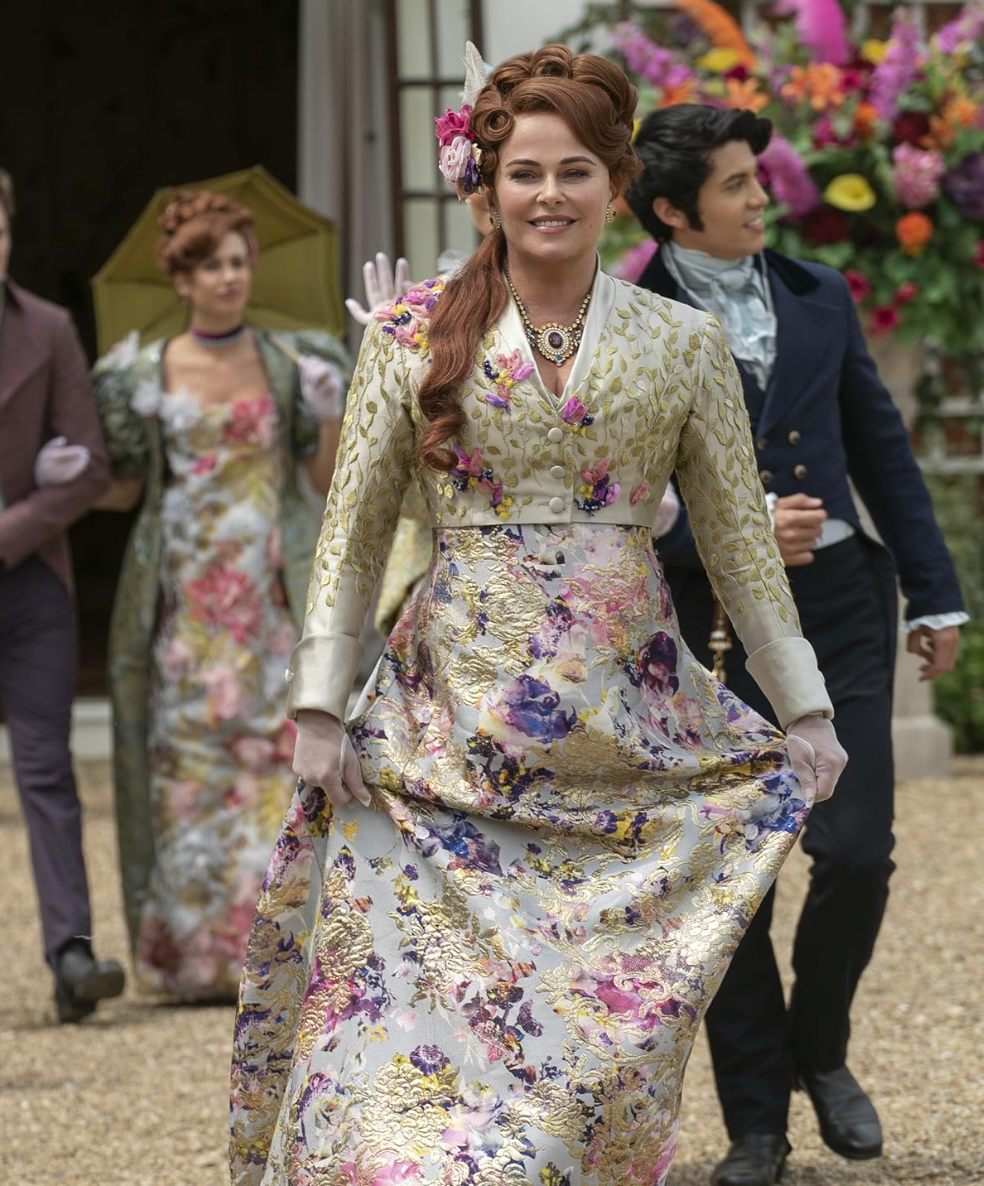
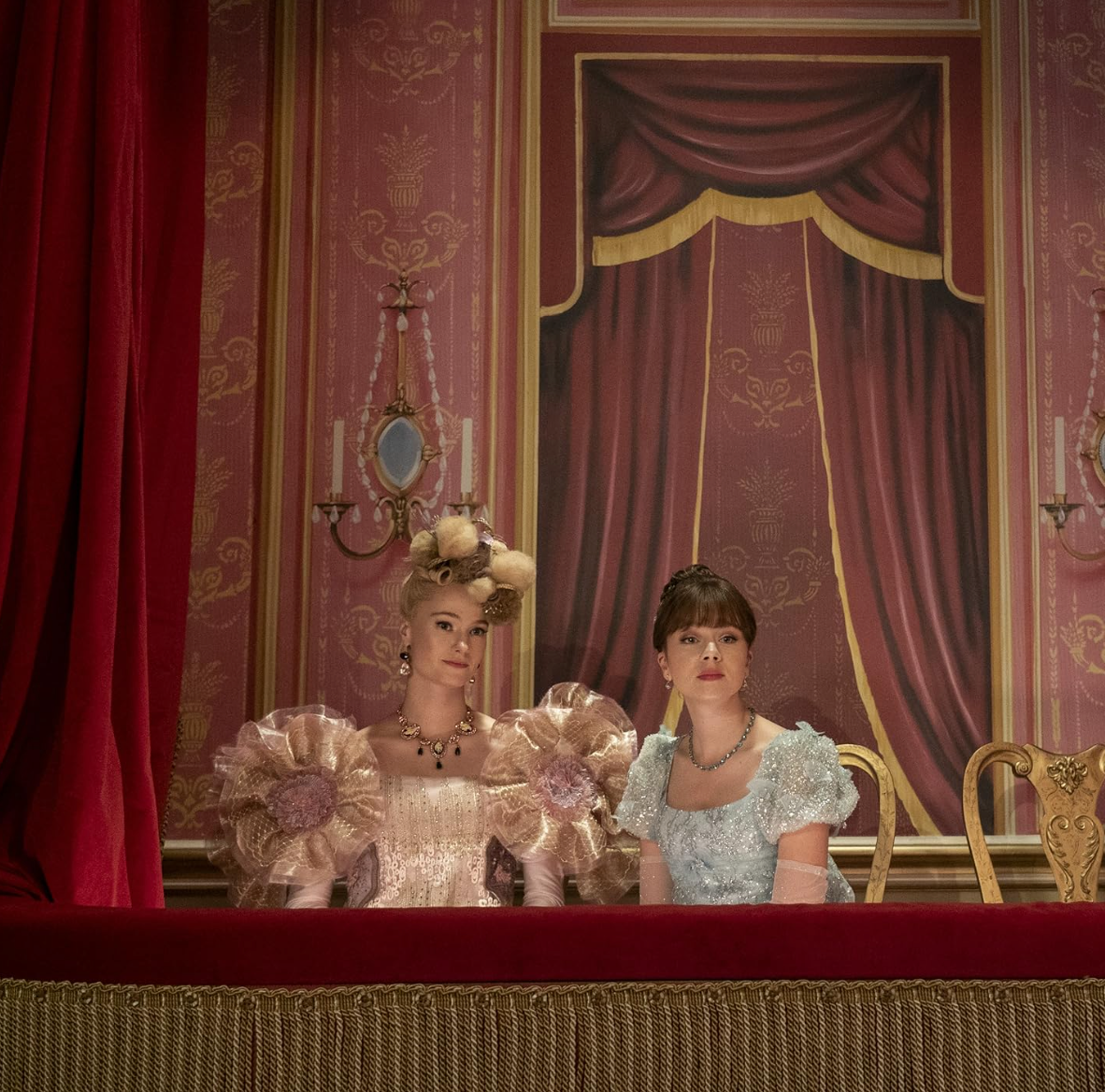
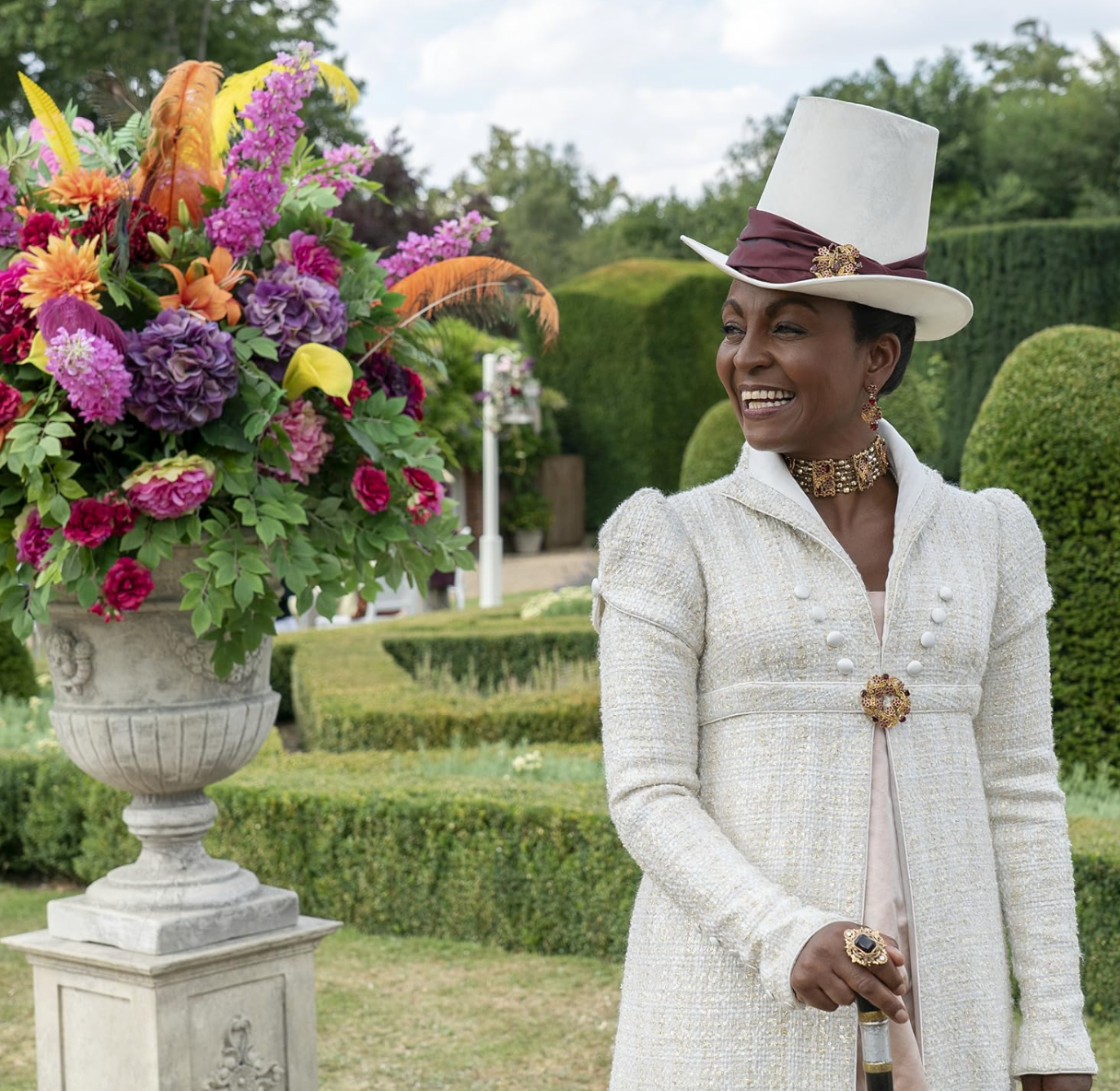
Courtesy of Netflix
2. The Color Psychology of the Families
Color in Bridgerton is not decorative. It is narrative.
The Bridgerton family lives in gradients of blue. Soft, powdery, hopeful blue. It communicates sincerity, innocence, emotional openness. The visual language positions them as romantics first.
The Featheringtons exist in acidic citrus tones. Chartreuse, saffron, bold florals. Their palette is loud, aspirational, socially ambitious. The color exaggeration reflects their hunger for visibility and status.
Later seasons expand this chromatic storytelling. Rich jewel tones suggest maturity, danger, and intensity. Romantic tension deepens as palettes darken.
This is costume and set design working in harmony. Walls, gowns, flowers, and wallpaper echo one another. The aesthetic becomes immersive.
3. The Hyper-Romantic Regency Remix
Bridgerton does not recreate the Regency era. It remixes it.
The show’s costume designer famously modernized silhouettes, amplified embellishments, and leaned into fantasy over strict historical accuracy. Empire waists are sharper. Necklines are bolder. Sparkle is increased.
Hair and beauty follow the same logic. Soft tendrils frame faces. Skin glows with dewy luminosity rather than powdered pallor. Makeup is subtle but contemporary in finish. It reads like modern beauty filtered through a Regency lens.
And then there’s the music.
Classical string arrangements of contemporary pop songs float through ballroom scenes. Ariana Grande becomes orchestral. Taylor Swift feels aristocratic. Billie Eilish transforms into a waltz.
The effect is disorienting in the best way. It collapses time. It tells us this world is emotionally modern, even if visually historical.
Bridgerton isn’t about 1813. It’s about how 1813 feels in 2026.
4. Femininity and Fantasy as Power
Perhaps the most radical aesthetic choice the series makes is its refusal to replicate the racial and gender hierarchies of the actual Regency era.
Bridgerton constructs an alternative aristocracy. A racially diverse high society. Women who feel interior, complex, emotionally articulate. Love stories centered around female desire.
This isn’t accidental casting. It’s part of the aesthetic thesis.
The show builds an “idealized” social structure where romance, not oppression, drives the drama. It is fantasy not just in decor but in power dynamics.
And this is essential to the Bridgerton aesthetic. The visual softness is supported by ideological softness. The world feels aspirational because it imagines a more inclusive past.
Fantasy becomes a corrective lens.
5. Its Influence on Modern Aesthetics
Bridgerton did not invent these aesthetics, but it accelerated them.
Coquette
Ribbons. Pearls. Blush pink. Romantic yearning. The coquette aesthetic exploded across TikTok and Pinterest in tandem with the show’s popularity. Hyper-femininity reframed as intentional, not naïve.
Regencycore
Empire-waist dresses, gloves, florals, cameo jewelry. Wedding mood boards and fashion editorials absorbed Regency references almost immediately. The show turned historical costuming into mainstream trend fuel.
Soft Girl Revival
Pastels, emotional vulnerability, handwritten letters, longing glances. The soft girl aesthetic found narrative reinforcement in Bridgerton’s world. Tenderness became aspirational again.
And importantly, interior design followed suit. Floral wallpapers, antique-inspired mirrors, pastel upholstery, romantic table settings. The Regency fantasy seeped into modern homes.
When Netflix released that fireplace loop, it wasn’t just festive content. It was aesthetic merchandising.
6. Why It Resonates Now
There’s one word that keeps resurfacing around Bridgerton.
Yearning.
The show is a masterclass in slow-burn longing. Forbidden love. Enemies to lovers. Social barriers. Intense eye contact across crowded rooms. Emotional restraint building toward release.
Yearning is not new. It’s ancient. But culturally, it has surged as a theme in recent years. In an era of instant gratification, algorithmic dating, and emotional detachment, audiences crave tension again. Anticipation. Build-up. Earned intimacy.
Bridgerton packages yearning in silk gloves and string quartets.
It makes desire visible. Respectable. Grand.
Each season revolves around a love story that simmers before it ignites. That emotional architecture is as central to the aesthetic as the gowns.
The show reminds viewers that longing itself can be beautiful. That anticipation is cinematic. That restraint can heighten romance.
And perhaps that’s why it resonates so deeply.
Not because it’s historically accurate.
But because it’s emotionally excessive.
The Cultural Impact of the Bridgerton Aesthetic
Bridgerton proves something important about contemporary media. Aesthetic is not surface. It is structure.
Its color grading, décor, music, casting, costuming, and narrative themes work together to create a total mood universe. A world so immersive that viewers want to decorate like it, dress like it, soundtrack their lives like it.
It didn’t just revive Regency style. It revived romantic intensity.
In a culture often dominated by irony, Bridgerton chose sincerity. In a world that moves fast, it lingered on eye contact.
And in doing so, it helped make yearning fashionable again.
That might be its most powerful aesthetic contribution of all.