Physical Address
304 North Cardinal St.
Dorchester Center, MA 02124
Physical Address
304 North Cardinal St.
Dorchester Center, MA 02124

We shape our dwellings, and afterwards, our dwellings shape us. While we often view interior design through the lens of pure visual curation—an exercise in choosing the right marble grain or sourcing a rare bouclé chair—the truth is far more intimate. The rooms we inhabit are not merely backdrops to our lives; they are active participants in our psychological well-being.
Our brains are constantly, subliminally scanning our physical surroundings, translating spatial proportions, color temperatures, and light quality into chemical responses. To design a home with intention is to master this silent dialogue. It is the art of environmental curation—creating a sanctuary that doesn’t just look beautiful, but actively restores the mind.
Our perception of space is heavily tied to our evolutionary need for freedom and safety—a concept environmental psychologists call Prospect-Refuge Theory.
Large, airy spaces with high ceilings stimulate our capacity for creative, abstract thinking. They invite us to look upward and expand our mental horizons. However, vastness without comfort can feel cold and exposing.
The antidote lies in the furniture we select. By choosing low-slung, grounded seating—think plush, deep-seated Italian sofas and monolithic travertine coffee tables—we lower our visual center of gravity. This combination of airy vertical space and grounded horizontal furniture creates a perfect psychological duality: a feeling of limitless freedom overhead, coupled with absolute safety and sanctuary below.
The human brain is naturally hostile to sharp, rigid angles. In neurological studies, rooms filled with sharp-edged furniture and harsh geometric lines trigger a subtle, unconscious stress response in the amygdala—the brain’s fear center. This is because, in nature, sharp corners often signal danger or instability.
Conversely, curved lines act as a visual balm. Modern interior design has embraced this biological preference through the rise of organic, sculptural silhouettes:
A sterile room is a psychologically exhausting room. When a space is clad entirely in flat, synthetic materials, our tactile senses are starved, causing us to feel disconnected from our surroundings.
To create a restorative environment, we must design for the skin as much as the eye. Textural resonance is the art of layering contrasting tactile finishes to create sensory richness:
| Material | Psychological Impact | How to Style It |
| Unpolished Travertine / Limestone | Grounds the mind through raw, earthy permanence. | A heavy, honed-stone side table or a textured plaster wall finish. |
| Bouclé & Chunky Knits | Invites physical relaxation and a sense of protective warmth. | An oversized accent chair or a heavy, hand-woven throw draped over a leather sofa. |
| Brushed, Matte Metals | Offers a quiet, modern sophistication without cold glare. | Brushed brass or blackened steel hardware on kitchen cabinetry. |
| Raw, Open-Grain Oak | Connects the interior to nature, lowering heart rates (biophilia). | A solid wood dining table left unvarnished, showcasing its natural grain. |
Perhaps nothing dictates our circadian rhythm—and consequently, our mood—more than lighting. The rise of “smart lighting” is not just a technological luxury; it is a psychological necessity.
To cultivate a tranquil space, avoid the sterile trap of harsh, overhead “can” lights, which mimic the midday sun and keep our nervous systems in a state of alert. Instead, think of lighting as a layered composition:
[ COVE LIGHTING ]
(Soft, architectural wash)
│
[ EYE-LEVEL sconces / pendants ]
(Warm, intimate glow)
│
[ TASK LIGHTING ]
(Focused reading lamps)
│
[ FLOOR-LEVEL lamps ]
(Puddles of low, ambient warmth)
By diffusing light at multiple heights—and keeping the color temperature warm (around 2700K)—you allow your home to transition from a productive daytime workspace to a deeply restorative evening cocoon.
The ultimate enemy of mental peace is clutter. Every object in our field of vision demands a small fraction of our cognitive processing power. When a room is crowded with decorative objects, our brains are forced to work overtime to filter out the visual noise.
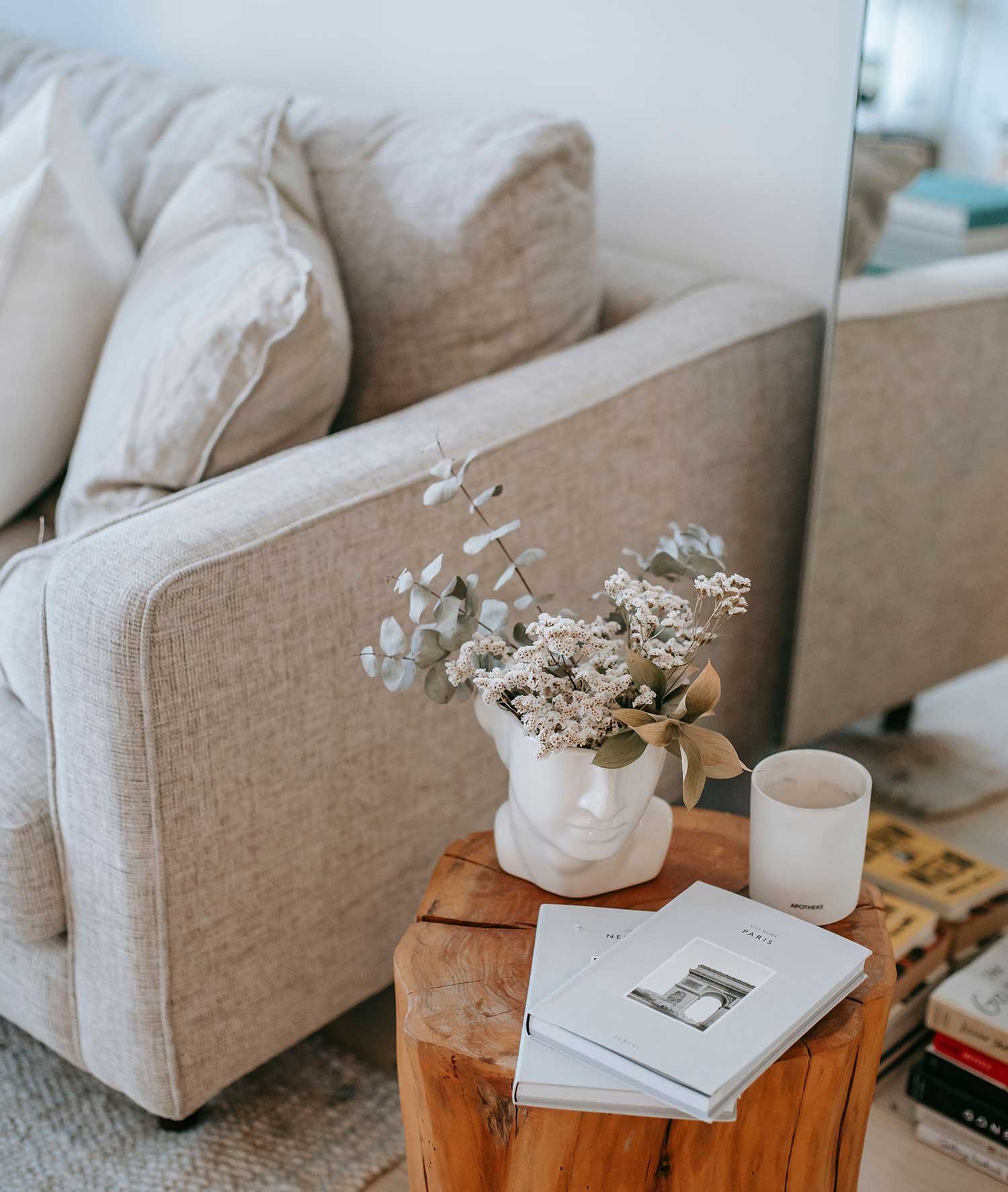
This does not mean your home must look like a barren white gallery. Rather, embrace the art of the “curated pause.” Leave corners empty. Allow a single, beautiful ceramic vessel to sit on a console table entirely by itself. Give your favorite art pieces physical space to breathe on the wall.
When we give our objects room to exist, we give our minds the space to do the exact same thing.